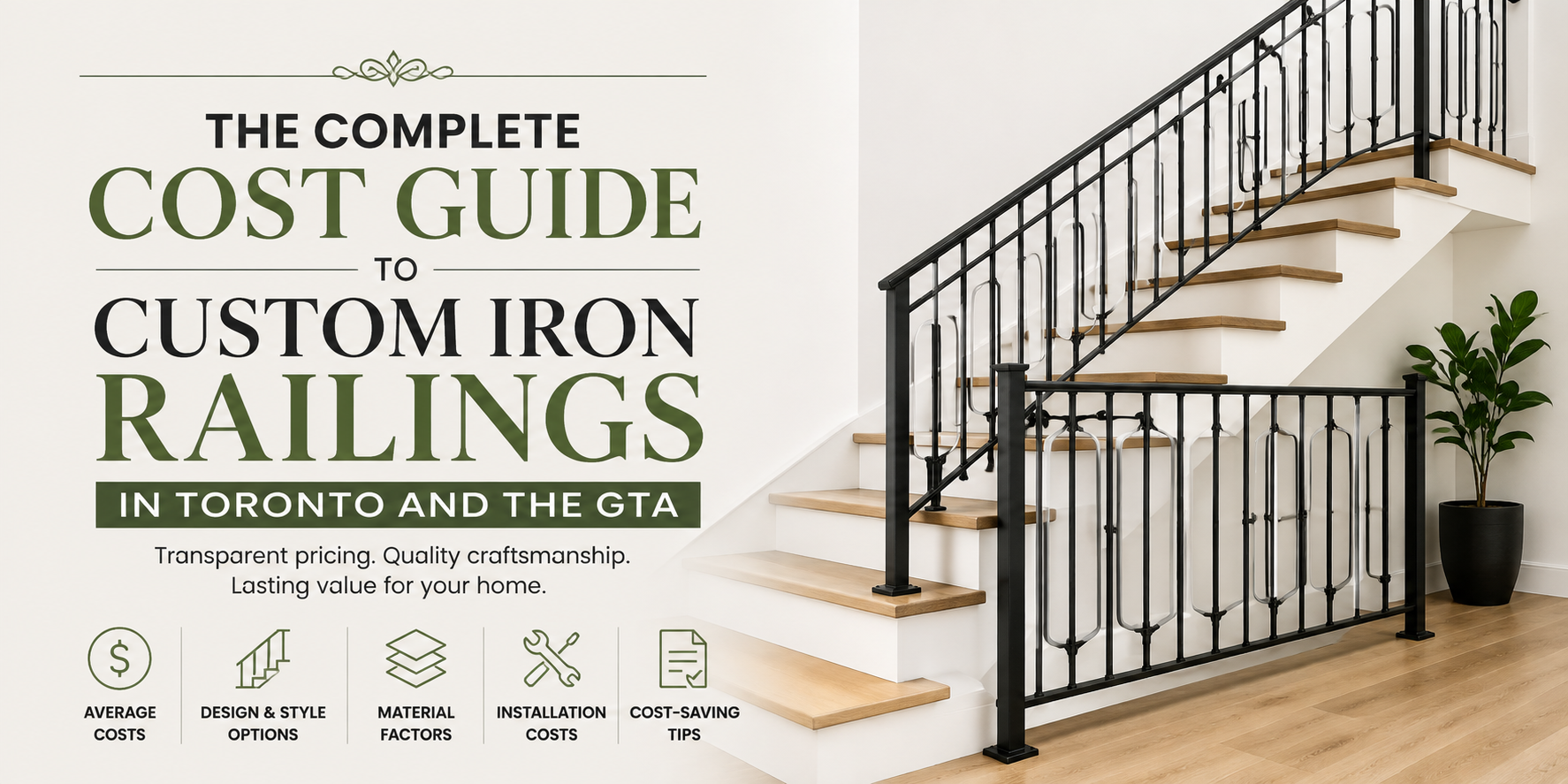
How much do custom iron railings cost?” is one of the hardest questions to get a straight answer to — mostly because the honest answer is “it depends,” and most pages that claim otherwise are guessing. Design complexity, linear footage, material, finish, and site conditions all swing the final number, sometimes dramatically.
This guide breaks down exactly what drives cost up or down, what a realistic budgeting range looks like across different project types in Toronto and the GTA, and how to read a quote so you’re comparing apples to apples between fabricators.
Why Iron Railing Costs Vary So Much
Unlike a prefab railing kit with a fixed price tag, custom iron railings are priced per project. Two homes on the same street can get very different quotes for what looks like a similar railing, because the pricing depends on factors that aren’t always visible from the street.
The Core Cost Drivers
- Linear footage: Most fabricators price per linear foot, so longer runs cost more in total, though often at a slightly lower per-foot rate at scale.
- Design complexity: Straight balusters cost less to fabricate than hand-forged scrollwork or custom finials.
- Material: Mild steel is generally more affordable than true wrought iron; aluminum iron-look alternatives sit at a different price point entirely.
- Site conditions: Uneven staircases, existing structure removal, and difficult access all add labor time.
- Finish: Powder coating, traditional paint, and specialty finishes (like faux bronze or hand-applied patina) vary in cost and labor.
- Heritage or permit requirements: Not usually a direct cost driver, but can add time — and time sometimes affects scheduling-related costs.
General Price Ranges by Project Type
These ranges reflect typical market patterns for custom ironwork in the GTA and are meant as a starting point for budgeting conversations — not a substitute for a site-specific quote, since actual pricing depends heavily on the factors above.
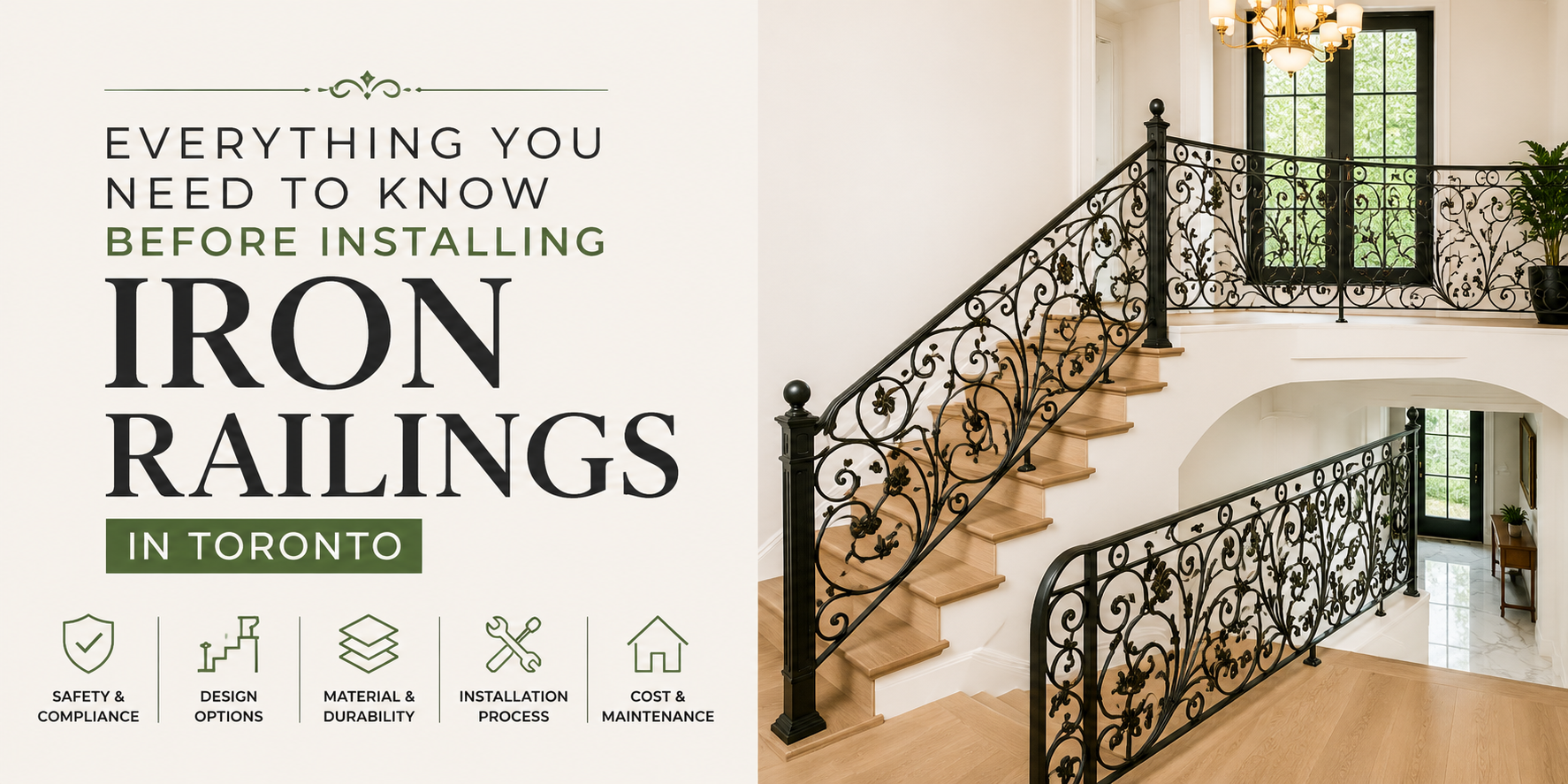
Interior Staircase Railings
Interior staircase railings tend to sit at the higher end of the per-foot range due to precision fitting requirements, especially on curved or winding stairs, and the finish work expected for an indoor feature.
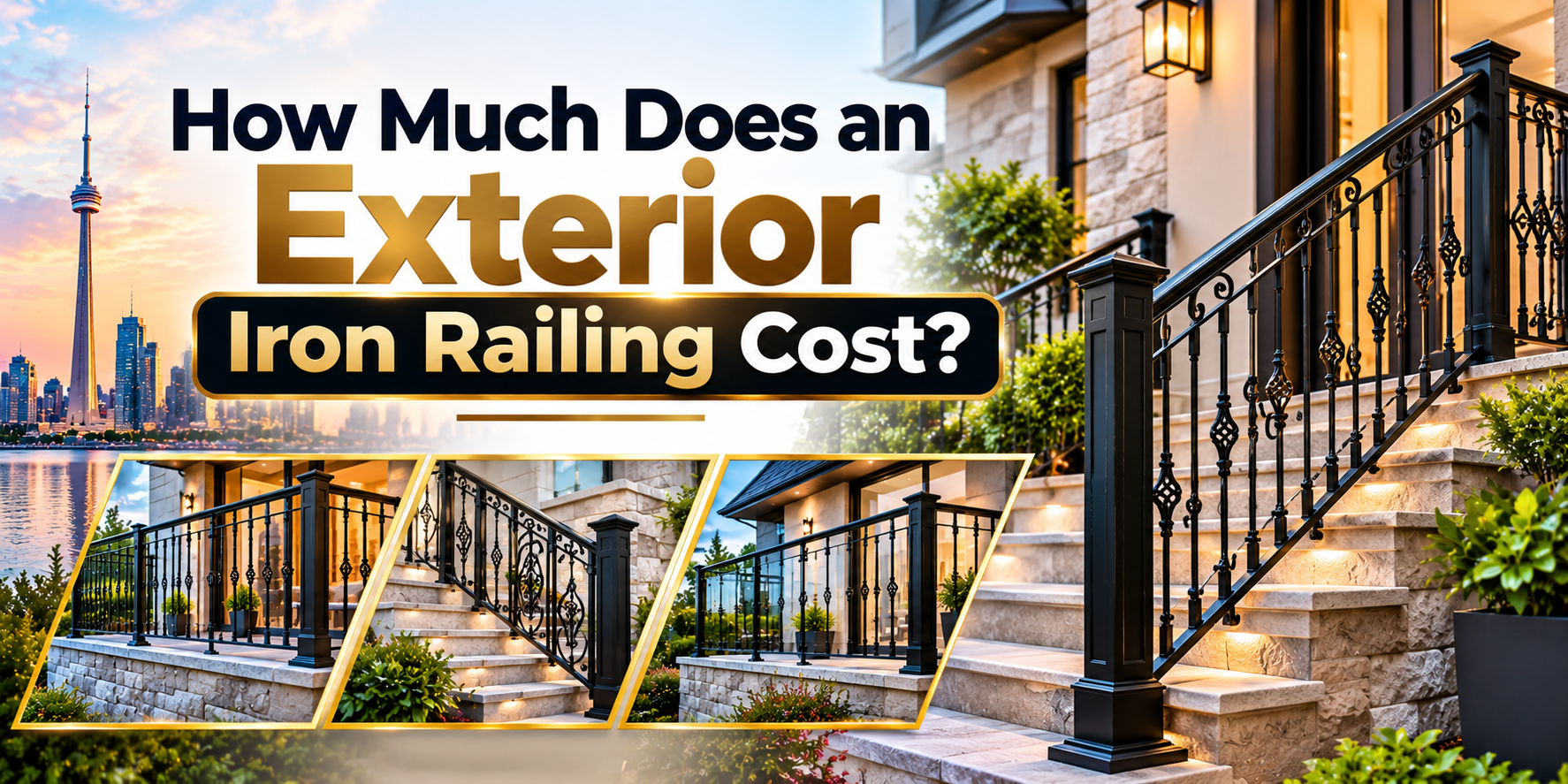
Exterior Porch and Deck Railings
Exterior railings typically involve more linear footage but simpler, more repetitive baluster patterns, which can offset some of the per-foot cost compared to an ornate interior staircase.
Heritage-Style Restoration Railings
Hand-forged scrollwork, custom finials, and pattern-matching to existing ironwork generally push these projects toward the higher end of the range, reflecting the additional skilled labor and design time involved.
Balcony and Juliet Railings
Smaller in scale, these projects often carry a higher effective per-foot cost due to minimum fabrication and installation charges that apply regardless of total footage.
Sample Cost Comparison Table
| Project Type | Typical Complexity | Relative Cost Level |
|---|---|---|
| Straight interior staircase railing | Low-Medium | $$ |
| Curved or winding staircase railing | High | $$$$ |
| Simple exterior porch railing | Low | $$ |
| Heritage scrollwork restoration | High | $$$$ |
| Small Juliet balcony railing | Medium (due to minimums) | $$$ |
| Long exterior deck railing run | Medium | $$$ |
Because exact dollar figures shift with material pricing, labor rates, and project specifics, the most reliable way to budget is a written, itemized quote from a local fabricator rather than relying on published averages.
What’s Typically Included in a Quote
Design and Consultation
Initial site visit, measurement, and design discussion — sometimes included in the quote, sometimes billed separately for highly custom or heritage projects.
Materials
The cost of raw iron or steel, plus any decorative components like finials or scroll elements.
Fabrication Labor
Shop time spent cutting, forging, and welding the railing to spec.
Finishing
Powder coating, painting, or specialty finish application.
Installation
On-site anchoring, leveling, and final adjustments, including any necessary drilling into concrete or masonry.
What’s Often Billed Separately
- Permit application fees, if required
- Removal and disposal of existing railings
- Structural repairs to damaged framing or masonry discovered during installation
- Heritage district application or documentation support
How to Read and Compare Quotes
Check for Itemization
A detailed quote breaks down material, labor, and finish separately. A single lump-sum number makes it harder to know what you’re actually paying for — and harder to compare against a competing quote.
Confirm What Measurement Method Was Used
Quotes based on rough estimates from photos or phone descriptions are less reliable than those based on an in-person site visit, especially for older homes where staircases are rarely perfectly uniform.
Ask About Warranty Coverage
Reputable fabricators typically warranty both workmanship and finish for a defined period. A significantly cheaper quote with no warranty language is worth a closer look before signing.
Clarify Timeline Commitments
Custom fabrication takes time. A quote that doesn’t specify an estimated completion window makes it harder to plan around seasonal installation windows in Toronto’s climate.
Ways to Manage Cost Without Sacrificing Quality
Simplify the Pattern Without Losing Character
A restrained scrollwork pattern on key sections — like newel posts — combined with simpler straight balusters elsewhere can reduce labor cost while still achieving a custom, heritage-appropriate look.
Choose Mild Steel Over True Wrought Iron
For most residential projects, quality mild steel with a proper protective coating achieves a visually identical result to traditional wrought iron at a lower material cost.
Bundle Multiple Railing Sections in One Project
Fabricators often offer better per-foot pricing when quoting a full project — staircase, porch, and balcony together — rather than tackling each section separately over time.
Time the Project Outside Peak Season
Scheduling fabrication and installation in spring or fall, rather than the busiest summer months, sometimes allows for more competitive pricing and shorter lead times.
Red Flags to Watch for When Comparing Prices
Quotes Given Without a Site Visit
Accurate pricing depends on precise measurements. A quote generated purely from a phone call or a few photos carries more risk of change orders later.
No Mention of Coating or Finish Type
Coating quality significantly affects how well a railing resists rust in the GTA’s climate. A quote that doesn’t specify the finish process makes it hard to judge long-term value.
Prices That Seem Far Below Market Range
Unusually low quotes sometimes reflect thinner-gauge material, welded-only joinery instead of traditional methods, or subcontracted labor with less oversight — all of which can shorten the railing’s lifespan.
Vague Timeline or Payment Terms
Clear payment milestones tied to project stages (design approval, fabrication start, installation) are standard practice among established fabricators.
Frequently Asked Questions
What is the average cost of custom iron railings in Toronto?
Costs vary significantly based on linear footage, design complexity, material, and finish, so there isn’t a single reliable average. A site-specific written quote from a local fabricator is the most accurate way to budget for your particular project.
Are interior or exterior iron railings more expensive?
It depends on the project. Interior staircase railings often involve more precision fitting and finish work, while exterior railings may involve more linear footage. Complexity of design typically matters more than interior versus exterior placement.
Does heritage-style ironwork cost more than modern designs?
Generally yes, since hand-forged scrollwork and pattern-matching to existing architectural details require more skilled labor and design time than simpler, repetitive modern patterns.
Is it cheaper to repair an existing iron railing than replace it?
In many cases, yes — repairing rust damage or re-welding a loose section costs less than full replacement, provided the underlying structure and material are still sound. A fabricator can typically assess this during an in-person inspection.
Do I need to pay for a quote or site visit?
This varies by fabricator. Some offer free initial consultations, while others charge a design fee for highly custom or heritage-specific projects, particularly when detailed drawings or heritage documentation are required.
Final Thoughts
Custom iron railing pricing in Toronto and the GTA depends on more variables than most homeowners expect going in — footage, design complexity, material, finish, and site conditions all play a role. Rather than anchoring to a single published number, use this guide to understand what’s actually driving your specific project’s cost, then get a detailed, itemized quote from a fabricator with local experience so you’re comparing real numbers instead of rough estimates.