
Iron balcony railings are one of the safest and longest-lasting railing options for Toronto homes because they meet strict Ontario Building Code height and spacing requirements while resisting the city’s harsh winters, salt exposure, and temperature swings far better than wood or basic aluminum. For homeowners comparing Iron Railing Toronto options for a balcony, terrace, or rooftop deck, the right combination of design and safety compliance makes the difference between a railing that simply looks good and one that performs reliably for decades.
Why Balconies Need Special Railing Considerations
Balcony railings carry more responsibility than most other railings on a property. They’re exposed to wind, rain, snow, and direct sun year-round, and they’re the primary safety barrier preventing falls from an elevated space. That combination means design choices for a balcony can’t be based on looks alone — safety and code compliance have to come first.
Iron Railings Toronto homeowners install on balconies typically need to balance three things at once: structural strength, open sightlines, and a finish that holds up outdoors.

Ontario Building Code Requirements for Balcony Railings
Before choosing a design, it helps to understand the baseline safety rules your railing has to meet.
Minimum Height Requirements
Under the Ontario Building Code, balcony guards generally need to be at least 1,070 mm (about 42 inches) high when the balcony is more than 1.8 metres above grade. Lower balconies may have slightly different requirements, so it’s worth confirming the exact height with your installer or local building department before finalizing a design.
Baluster Spacing
Gaps between vertical balusters are restricted to prevent a small child from slipping through or climbing the railing — typically no more than 100 mm (about 4 inches) between pickets. This requirement often shapes the overall look of the railing, since tighter spacing naturally results in a more solid, structured appearance.
Load and Structural Requirements
Balcony railings must withstand specific lateral load requirements to ensure they won’t give way under pressure. This is why post spacing, anchoring depth, and weld quality matter just as much as the material itself — a beautiful railing that isn’t structurally sound isn’t safe.
Popular Iron Balcony Railing Designs in Toronto
Once the safety requirements are locked in, there’s still plenty of room for style.
Vertical Baluster Railings
The most common and code-friendly option, vertical iron balusters offer a clean, timeless look that works on both traditional and modern homes. This style is a frequent choice for Toronto Iron Railings projects because it satisfies spacing requirements without feeling boxy or heavy.
Horizontal Bar Railings
Horizontal iron railings give a sleek, minimalist look popular on newer builds and condo-style properties. Because horizontal bars can be easier to climb, some municipalities restrict or require additional design considerations for this style on balconies — a good reason to confirm code compliance with your fabricator before committing to the look.
Decorative Scrollwork Railings
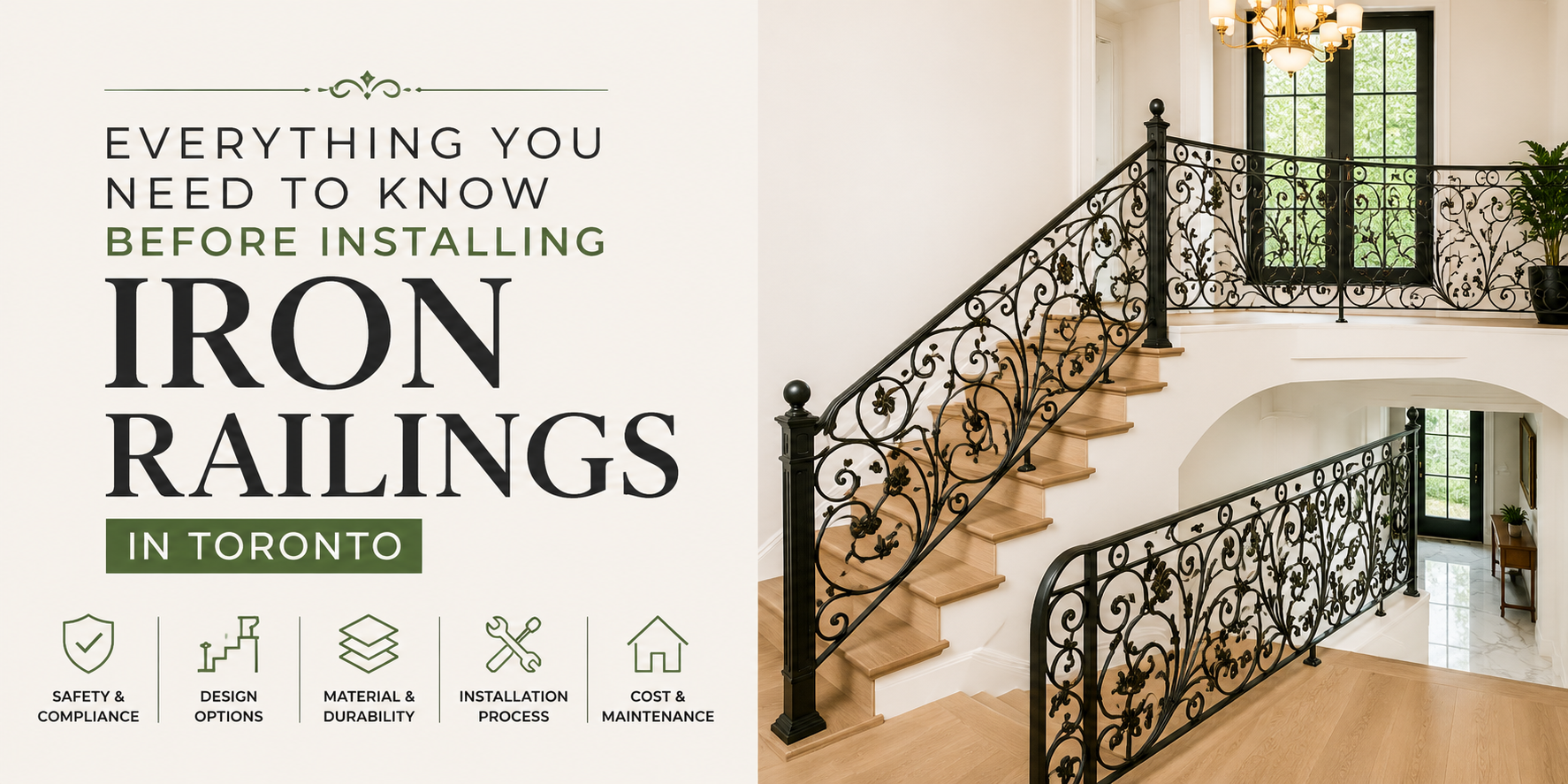
For heritage homes or properties wanting a more ornate finish, scrollwork patterns add visual interest while still meeting spacing requirements, since the decorative elements are worked in without widening the overall gaps.
Glass-and-Iron Combination Railings
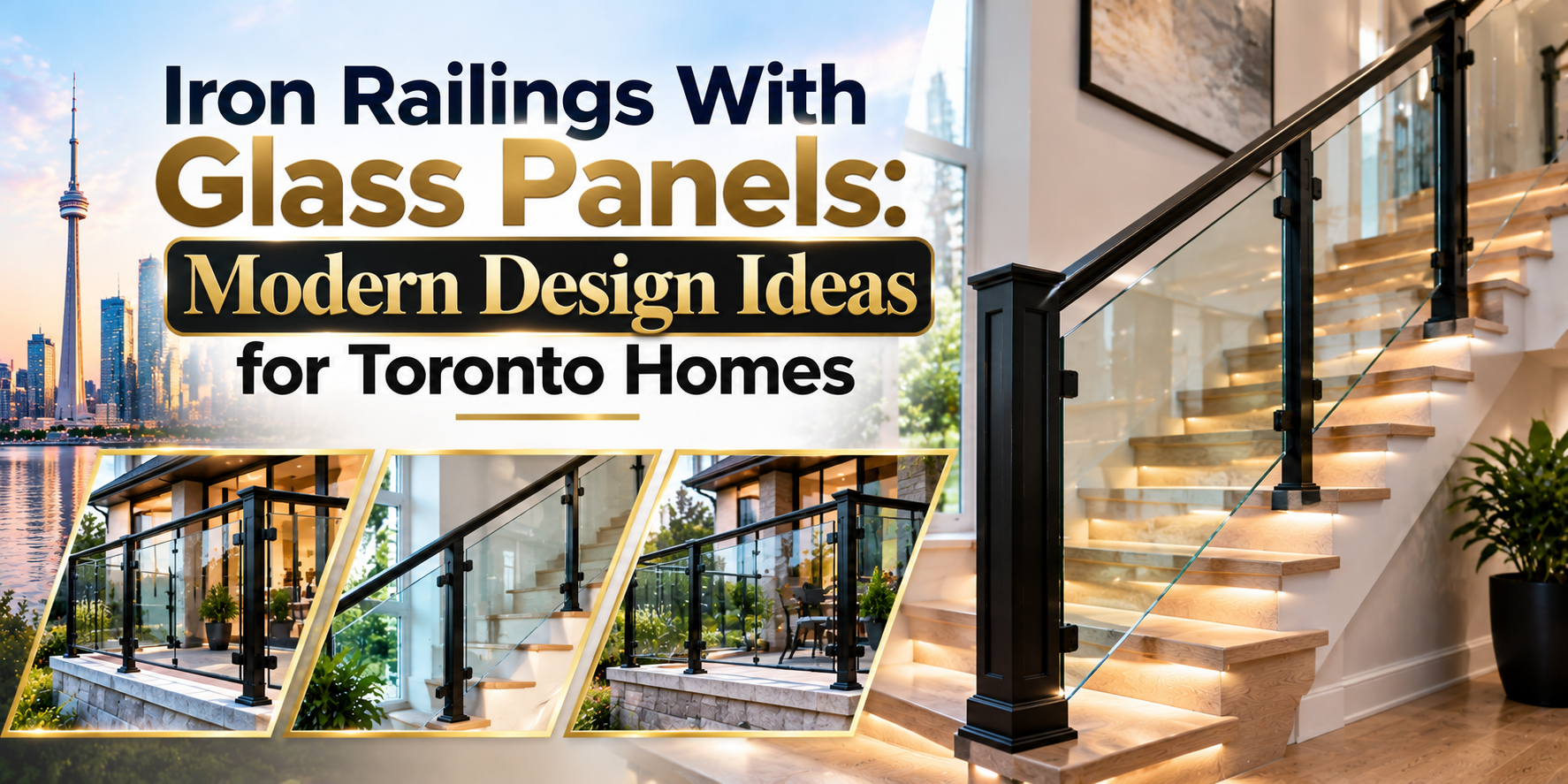
Pairing iron posts and top rails with tempered glass panels is a growing trend for Iron Balcony Railings on modern homes and condos. This combination keeps sightlines completely open while still providing the strength and code compliance of a solid metal frame.
Choosing the Right Finish for Toronto’s Climate
A balcony railing’s finish matters just as much as its design, since it’s fully exposed to the elements.
Powder Coating
Powder-coated finishes are the most durable option for exterior use, resisting chipping, fading, and rust far better than standard paint. Matte black remains the most requested finish across both traditional and contemporary properties.
Galvanization
A galvanized base coat beneath the powder coating adds an extra layer of rust protection — an important step for balconies facing wind-driven rain or exposure to road salt carried up by wind in urban settings.
Color and Style Matching
Beyond black, bronze and dark grey finishes are increasingly popular for matching modern window frames and exterior trim, giving the balcony a more cohesive appearance with the rest of the home.
Maintenance Tips Specific to Balcony Railings
Because balcony railings face constant weather exposure, a few extra habits help extend their lifespan:
- Clear standing water or snow buildup at the base of posts
- Check for loose anchoring points twice a year, especially after winter
- Rinse off salt residue carried by wind in coastal or high-exposure areas
- Inspect welds and joints for hairline rust before it spreads
Working With a Professional Installer
Balcony railings sit at the intersection of design and structural safety, which makes professional installation especially important. A qualified installer will confirm code compliance, calculate proper anchoring for your specific balcony structure, and ensure the finished railing is both beautiful and genuinely safe to lean on.
Design That Doesn’t Compromise Safety
A well-designed iron balcony railing shouldn’t force homeowners to choose between style and safety — the right fabricator can deliver both. Whether the goal is a classic vertical baluster look, a modern glass-and-iron combination, or something closer to a heritage design, code compliance and quality materials should always be the foundation.
Iron and Railings International Inc. designs and installs custom iron balcony railings across Toronto, built to meet Ontario Building Code requirements and withstand the city’s weather year-round. If you’re planning a new balcony railing or replacing an aging one, our team can help you choose a design that looks great and holds up for the long term.