Choosing the right material for a custom iron gate is one of the most important decisions you’ll make when upgrading your home’s security, curb appeal, and overall property value. While many homeowners use the terms “iron gate” and “steel gate” interchangeably, wrought iron and steel are different materials with unique strengths, maintenance requirements, and costs.
Both options provide outstanding durability compared to wood, vinyl, or aluminum gates, but the best choice depends on your budget, design preferences, climate, and intended use. Whether you’re installing a driveway entrance, pedestrian gate, garden gate, or commercial security gate, understanding the differences between wrought iron and steel will help you make an informed investment.
This guide compares wrought iron vs steel in terms of durability, appearance, maintenance, cost, security, customization, and longevity so you can determine which material best suits your property.
Why Material Choice Matters
Your gate is one of the first things visitors notice. Beyond aesthetics, it serves as a barrier that protects your family, vehicles, pets, and property.
Selecting the right material affects:
- Overall project cost
- Long-term durability
- Security level
- Maintenance requirements
- Design flexibility
- Weather resistance
- Property value
- Lifespan of the gate
A professionally fabricated gate built from quality materials can provide decades of reliable service.
What Is Wrought Iron?
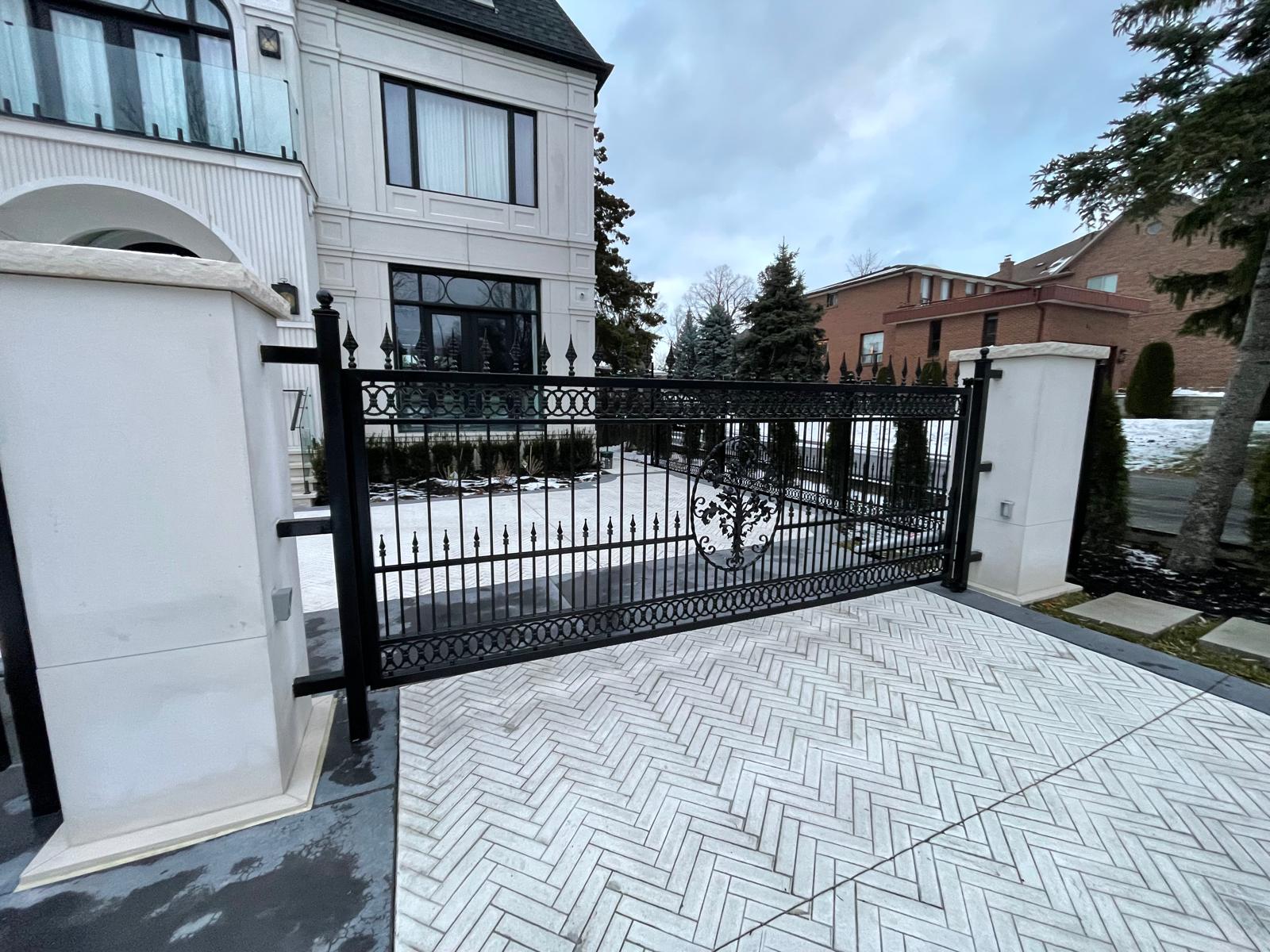
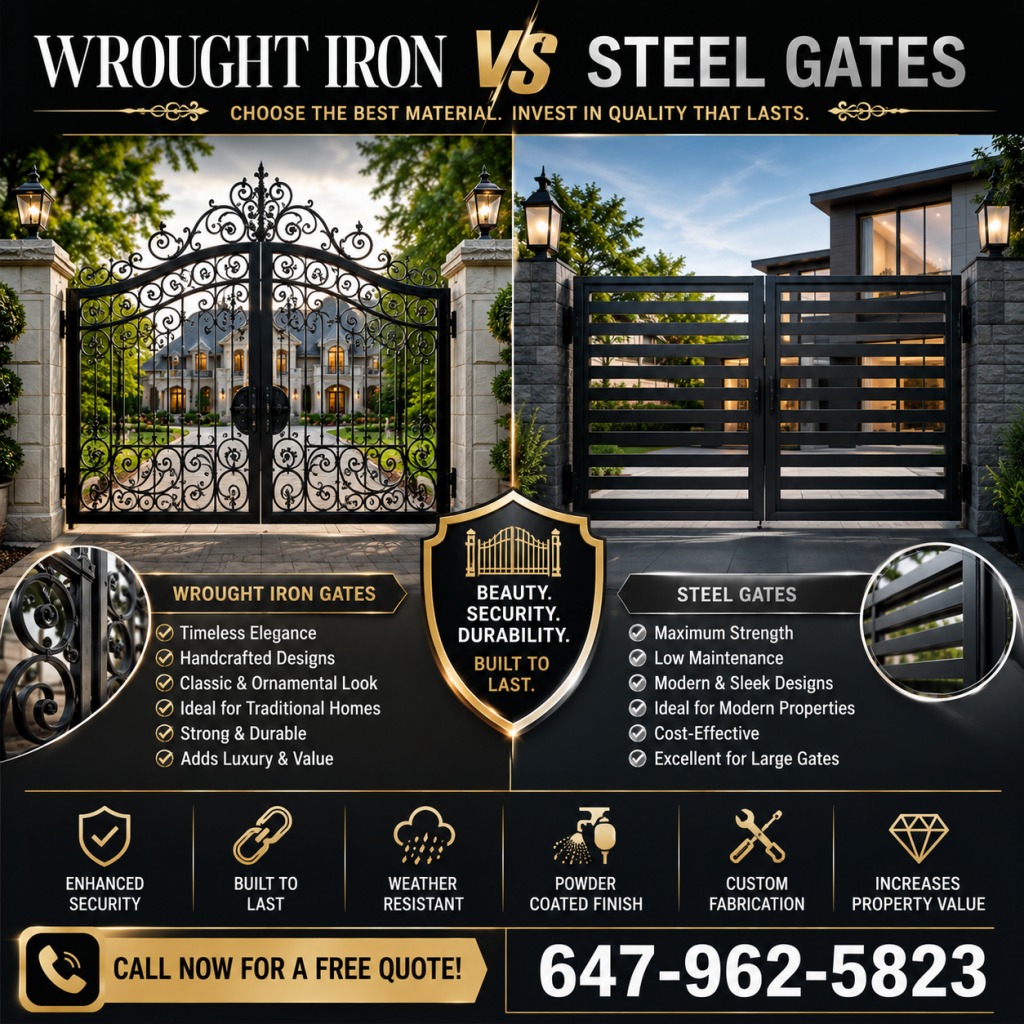
Wrought iron is a traditional iron material known for its exceptional strength and decorative appeal. Historically, blacksmiths shaped wrought iron by heating and forging it into intricate patterns.
Today, genuine wrought iron is less common because modern fabrication often uses mild steel with wrought iron-inspired decorative elements. However, the term “wrought iron gate” is still widely used to describe ornamental gates featuring elegant scrollwork, finials, and handcrafted designs.
Wrought iron is ideal for homeowners seeking a timeless, luxurious appearance.
What Is Steel?
Steel is an alloy made primarily of iron and carbon. It is one of the strongest and most versatile construction materials available today.
Modern custom gates are typically fabricated from structural steel tubing, heavy-gauge steel panels, or solid steel components. Steel offers outstanding strength while allowing manufacturers to create both modern and traditional designs.
Because of its consistency and availability, steel has become the preferred material for most residential and commercial gate projects.
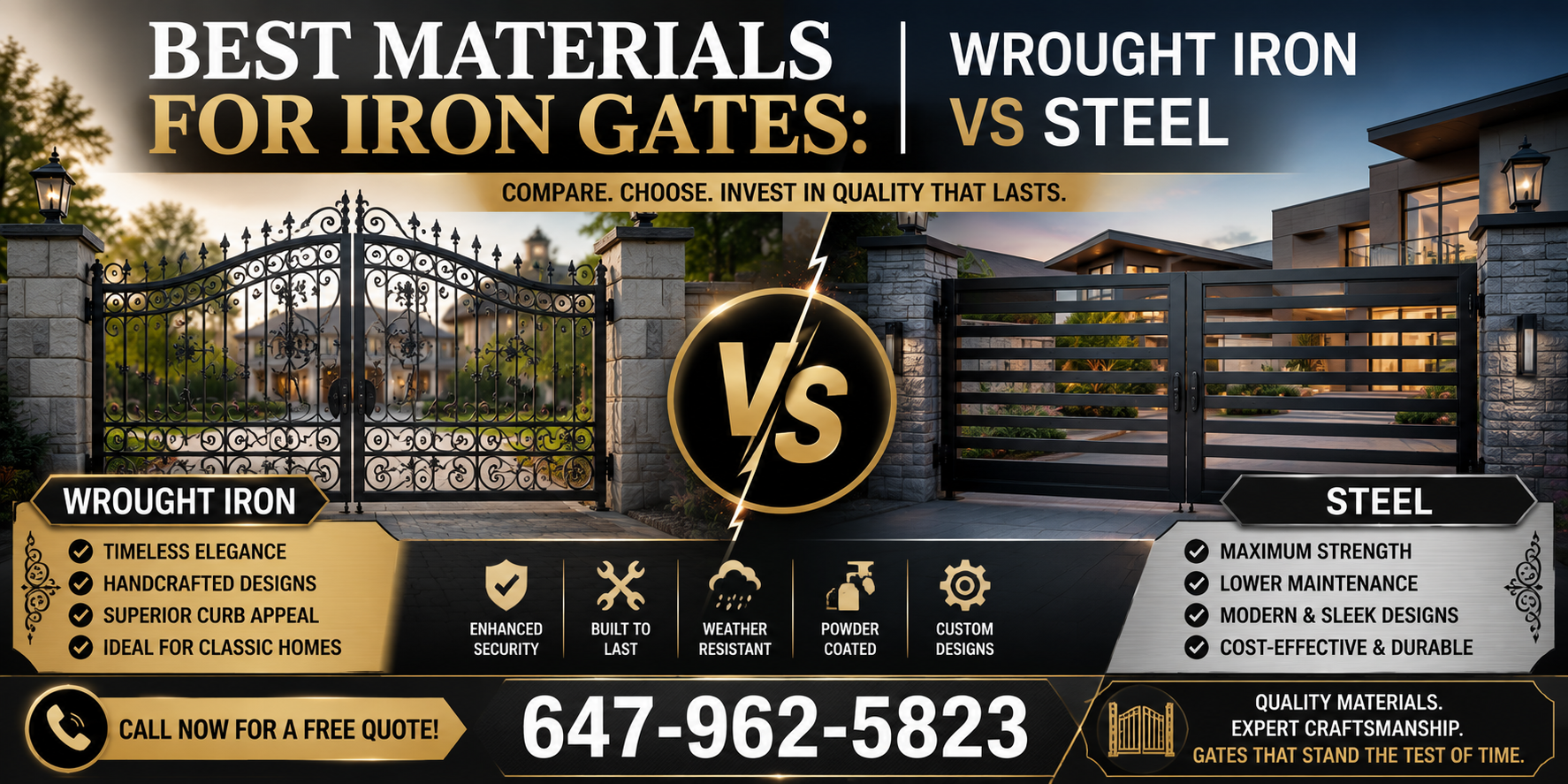
Wrought Iron vs Steel: Strength Comparison
When comparing strength, steel generally outperforms traditional wrought iron.
Steel offers:
- Higher tensile strength
- Better impact resistance
- Greater load-bearing capacity
- Improved structural stability
- Excellent performance for large driveway gates
Heavy steel frames are especially suitable for automated sliding gates and oversized estate entrances.
Wrought iron remains incredibly durable but is generally chosen more for its classic appearance than maximum structural performance.
Appearance and Design Options
One of the biggest reasons homeowners choose wrought iron is its elegant, handcrafted look.
Popular wrought iron design features include:
Decorative Scrollwork
Beautiful curved patterns create a sophisticated appearance suitable for luxury homes.
Ornamental Finials
Decorative spear tops add both style and security.
Custom Artwork
Family crests, initials, floral accents, and custom emblems can be incorporated into the design.
Steel gates, on the other hand, offer greater versatility for modern architecture.
Popular steel gate styles include:
- Horizontal slat designs
- Minimalist frames
- Privacy panel gates
- Laser-cut patterns
- Contemporary geometric layouts
- Industrial-inspired entrances
Both materials can be customized extensively, but steel is often easier to fabricate into modern designs.
Durability and Lifespan
Both wrought iron and steel are designed for long-term performance.
A professionally fabricated gate can last between 30 and 50 years or more with proper maintenance.
Steel performs exceptionally well because of its strength and resistance to bending under heavy loads.
Wrought iron also offers impressive longevity but may require more regular maintenance to prevent corrosion, especially in humid climates.
Proper fabrication, protective coatings, and professional installation play a larger role in longevity than the material alone.
Rust Resistance
Neither wrought iron nor untreated steel is naturally rust-proof.
However, modern finishing techniques significantly improve corrosion resistance.
Common protective finishes include:
Powder Coating
Powder coating creates a durable protective barrier that resists moisture, UV exposure, scratches, and rust.
Zinc Primers
Galvanized or zinc-coated steel helps prevent corrosion before the final finish is applied.
Industrial Paint Systems
Professional paint systems provide additional protection while allowing homeowners to choose custom colors.
With proper finishing and occasional maintenance, both materials perform well in Canadian weather conditions.
Maintenance Requirements
Routine maintenance helps maximize the lifespan of any metal gate.
Recommended maintenance includes:
- Cleaning dirt and debris
- Inspecting for scratches
- Touching up damaged finishes
- Lubricating hinges
- Checking welds
- Tightening hardware
- Removing small rust spots immediately
Powder-coated steel typically requires slightly less maintenance than traditional wrought iron because of its highly durable finish.
Annual inspections can help prevent costly repairs.
Security Performance
Security is often a major reason homeowners invest in custom iron gates.
Steel provides outstanding resistance against:
- Forced entry
- Heavy impacts
- Bending
- Twisting
- Vehicle pressure
Commercial facilities frequently choose steel because it offers maximum structural integrity.
Wrought iron also provides excellent security while adding decorative appeal, making it popular for luxury residential properties.
Both materials can be paired with:
- Automatic gate openers
- Access control systems
- Keypads
- Video intercoms
- Security cameras
- Smart home integration
Cost Comparison
Cost is another important consideration.
Steel gates are generally more affordable because steel is widely available and easier to fabricate using modern manufacturing equipment.
Average pricing:
- Basic steel gate: Lower initial investment
- Decorative steel gate: Moderate pricing
- Premium wrought iron gate: Higher investment
Wrought iron typically costs more because of handcrafted detailing, custom forging, and labor-intensive fabrication.
While steel often provides better value for larger projects, wrought iron offers unmatched architectural elegance.
Best Choice for Modern Homes
Modern architectural homes typically pair well with steel gates.
Popular contemporary features include:
- Flat panels
- Clean horizontal lines
- Matte black finishes
- Hidden welds
- Minimalist hardware
- Privacy inserts
Steel’s fabrication flexibility makes it the preferred choice for modern residential designs.
Best Choice for Traditional Homes
Traditional homes often benefit from the timeless elegance of wrought iron.
Classic architectural styles include:
- Victorian
- Colonial
- Mediterranean
- French Country
- Tudor
- Estate properties
Decorative scrollwork, ornamental accents, and handcrafted details complement these home styles beautifully.
Which Material Lasts Longer?
Both materials offer decades of reliable service.
Longevity depends on:
- Fabrication quality
- Material thickness
- Protective coatings
- Professional installation
- Local climate
- Maintenance routine
A professionally built powder-coated steel gate may require less maintenance over time, while a well-maintained wrought iron gate can remain beautiful for generations.
Environmental Considerations
Steel is one of the world’s most recycled construction materials.
Many custom steel gates are manufactured using recycled steel, making them an environmentally responsible option.
Both steel and wrought iron can be recycled at the end of their service life, reducing environmental impact.
Choosing a durable gate that lasts several decades also minimizes replacement waste.
Which Material Should You Choose?
The best material depends on your priorities.
Choose wrought iron if you want:
- Classic elegance
- Ornamental craftsmanship
- Luxury appearance
- Historic architectural style
- Decorative customization
Choose steel if you want:
- Maximum strength
- Lower maintenance
- Better affordability
- Modern aesthetics
- Large automated driveway gates
Consulting an experienced iron gate fabricator can help you determine the best solution based on your property’s architecture, budget, and security requirements.
Frequently Asked Questions
Is wrought iron stronger than steel?
No. Steel generally has higher tensile strength and greater structural capacity, making it the stronger option for most modern gate applications.
Which material lasts longer?
Both wrought iron and steel can last 30 to 50 years or more with professional fabrication, protective coatings, and regular maintenance.
Is steel cheaper than wrought iron?
Yes. Steel is typically more affordable because it is easier to fabricate and more readily available than traditional wrought iron.
Which gate requires less maintenance?
Powder-coated steel gates usually require less maintenance, although both materials benefit from periodic cleaning, inspections, and touch-up work.
Are wrought iron gates better for luxury homes?
Yes. Wrought iron is widely recognized for its decorative craftsmanship and timeless elegance, making it a popular choice for luxury and estate-style properties.
Can both materials be automated?
Absolutely. Both wrought iron and steel gates can be equipped with automatic openers, remote controls, smartphone access, keypads, and other modern access control systems.
Which material is best for Canadian weather?
Both materials perform well in Canadian climates when they are professionally fabricated and protected with high-quality powder coating or corrosion-resistant finishes.
Conclusion
When comparing wrought iron vs steel for custom gates, there is no one-size-fits-all answer. Wrought iron stands out for its timeless beauty, handcrafted details, and luxurious appeal, making it an excellent choice for traditional and upscale properties. Steel, meanwhile, offers exceptional strength, versatility, affordability, and lower maintenance, making it ideal for modern homes, commercial properties, and automated driveway gates.
By considering factors such as design preferences, security needs, maintenance expectations, and budget, you can choose a gate material that enhances your property’s appearance while providing reliable performance for decades. Partnering with an experienced iron gate fabricator ensures you receive a custom solution built to the highest standards of quality, durability, and craftsmanship.